|
| Mahalingam, Thiruvidaimaruthur |
 |
| Thiruvidaimarudur Mahalingaswamy Temple view |
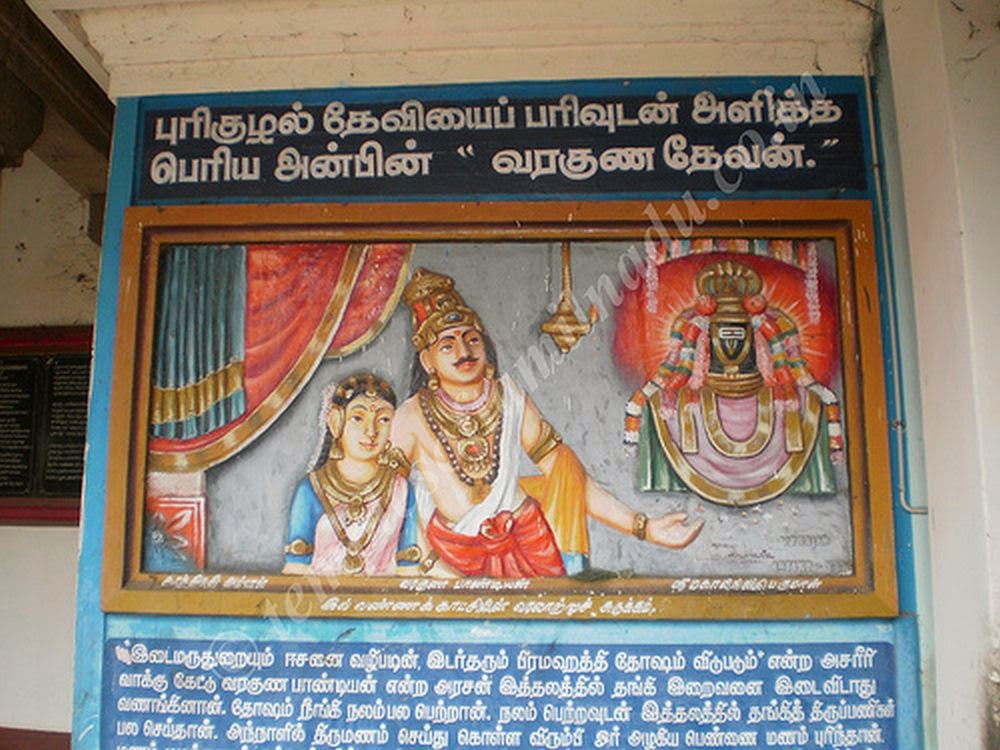 |
| Varagunapandian and Brahmahathi dosha: Stahala Purana of Thiruvidaimarudur |
 |
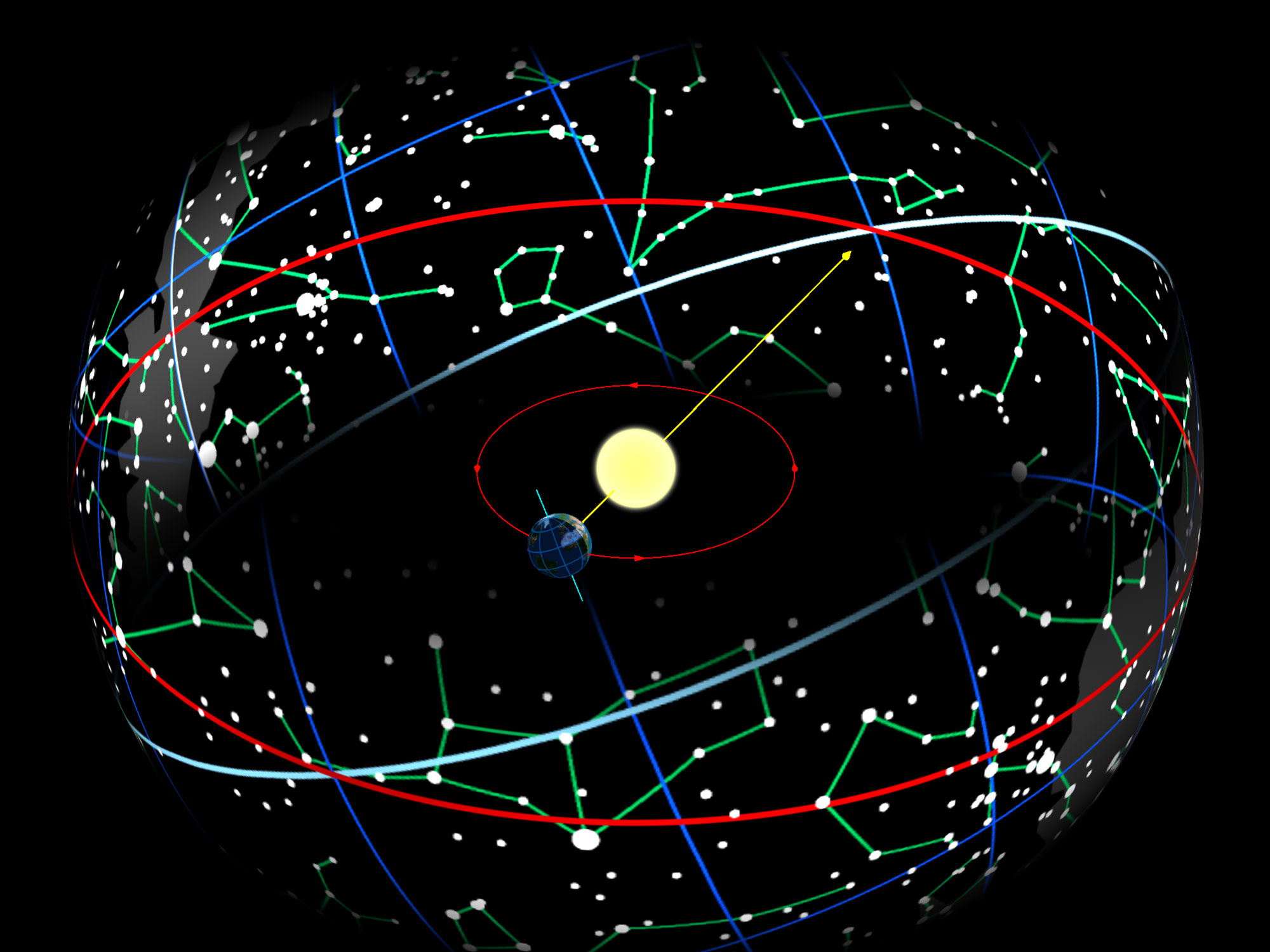
| 27 Shiva Lingas for the 27 siderial constellations: Remedial measures Nakshatra Dosha |
 |
| Huge Nandhi (Bull Vehicle of Lord Shiva) |
Mahalingaswamy temple, Thiruvidaimarudur is one among the three important Saivite shrines in India which adopt Maruda tree (Terminalia arjuna - Myrtales - Combretaceae family - commonly known as arjuna; Marudam tree in Tamil) as their holy tree (Sthala vriksha) and hence it is also known as Idai Marudur aka Madhyaarjuna in Thiruvidaimarudur, near Kumbakonam, Thanjavur district. The other two Saivites shrines are Mallikarjuna (Thalai Marudur ) temple in Sri Sailam, Andhra Pradesh and in Thiruppudaimarudur (Kadai Marudur aka Sputarjuna) in Ambasamudram, Thirunelvelli district. This temple is more spacious with three circumambulatory paths i.e, 1. Aswametha prakaram; 2. Kodumudi prakaram and 3. Pranava prakaram. Going around Aswametha prakaram will yield the benefit of performing aswametha yagam; going around Kodumudi prakaram is equivalent to Mount Kailash Parikrama; and circumambulation of Pranava prakaram will bring liberation soul from rebirth (moksha).
Mahalingam (huge self manifested (Swayambu) Shiva lingam) is presiding deity and the consort Brihatsundaragujambigai aka Nanmulainayaki at this ancient Saivite shrine. The Shiva linga is also considered as Jothirlinga and Sakthi shrine is also known as one of the Sakthi Bheetas. The Chakra Maha Meru is installed at this shrine. The temple with its imposing tower (gopuram) is one of the Panchakroha shrines.
The five Shivalingams: 1. Mahalingam at centre; 2. Viswanatha; 3. Rishipureeswara; 4. Athmanatha and 5. Chokkanatha at this shrine form Panchalinga khetra (Five Linga shrines). The shrine also has 27 Shiva Lingas for the 27 siderial constellations (star groups) and the devotees offer prayer pujas to the concerned Shiva Lingam as remedial measure against Nakshatra doshas. The temple is considered as holy as Varanasi or Kasi.
A group of 12 independent temples have adopted Lord Mahalingaswamy as their presiding deity and the following 12 temples form associate (parivara shrines) temples:
Mahalingam (huge self manifested (Swayambu) Shiva lingam) is presiding deity and the consort Brihatsundaragujambigai aka Nanmulainayaki at this ancient Saivite shrine. The Shiva linga is also considered as Jothirlinga and Sakthi shrine is also known as one of the Sakthi Bheetas. The Chakra Maha Meru is installed at this shrine. The temple with its imposing tower (gopuram) is one of the Panchakroha shrines.
The five Shivalingams: 1. Mahalingam at centre; 2. Viswanatha; 3. Rishipureeswara; 4. Athmanatha and 5. Chokkanatha at this shrine form Panchalinga khetra (Five Linga shrines). The shrine also has 27 Shiva Lingas for the 27 siderial constellations (star groups) and the devotees offer prayer pujas to the concerned Shiva Lingam as remedial measure against Nakshatra doshas. The temple is considered as holy as Varanasi or Kasi.
A group of 12 independent temples have adopted Lord Mahalingaswamy as their presiding deity and the following 12 temples form associate (parivara shrines) temples:
1. Vinayakar, Thiruvalanchuzhi;
2. Swaminathan, Swamimalai;
3. Ambigai, Thirukadiyur;
4. Dakshinamurthy, Alangudi;
5. Navagraha shrines in Suriyanar koil;
6. Saneeswarar, Thirunallaru;
7. Durgai, Patteswaram;
8. Chandikeswar, Sengalur;
9. Bhairavar, Sirkazhi;
10. Natarajar, Chidambaram;
11. Soamskandar, Thiruvarur; and
12. Nandhikeswarar, Thairuvavaduthurai.
Priests used mud pots to fetch water from river Cauvery for ablution purposes.
In Hindu astrological traditions, Brahmahathi dosha is considered as severe curse. This kind of doshas occurs if any one kills a brahmin (Hathi- sin caused by a murder – Brahminicide). The shtala purana indicates that Varaguna Pandiya’s horse accidentally crushed a Brahmin and killed him. The sin followed wherever he went. The Brahmahathi was chasing the king. The king sought asylum to Lord Mahalingaswamy. He entered from the front entrance and offered prayers and got out from the rear entrance. The Brahmahathi is still waiting outside the entrance for the king. The king was relieved of his sin. People inflicted with mental disorders may go around the circumambulatory path and get redress.
The Lord is being worshipped here by Vedas, Airawatha (Elephant vehicle of Indra) and the seven great saints - Vashista, Agasthya, Pattinathar, Badragiriyar, Romarishi, Kapila and Markandiya rishi and the Tamil Siddhar Shivavakya. The Lord is also gracing the kings Varagunadeva, Sukeerthi, Veerasena, Chitrakeerthi, Uvanasuvan, Maandada, Vasuman and Anjatthuvasan. The Lord was also invoked by Appar and Sundarar with Thevaram hymns.
The ancient temple has 159 inscriptions. One specific inscription documents the presence of theatre (Natakasala) for enacting dramas. The theatre artists received patronage from kings and one veli (approximately 3 acre) of cultible land was granted as gift to the artist for nurturing the art. The koothu (a form of folk drama) artists performed different styles of koothu including Arykoothu and Chakkaikoothu during festival time. The temple also served as the centre for fostering fine arts.
Arulmigu Mahalingaswamy Temple, Thiruvidaimarudur - 612 104, Thanjavur district is located 9 km north of Kumbakonam on Kumbakonam - Mayiladuthurai road. The shrine is well connected by public transport system.
Timing: 06.00 am to 12.00 pm and 04.00 pm to 09.00 pm.
In Hindu astrological traditions, Brahmahathi dosha is considered as severe curse. This kind of doshas occurs if any one kills a brahmin (Hathi- sin caused by a murder – Brahminicide). The shtala purana indicates that Varaguna Pandiya’s horse accidentally crushed a Brahmin and killed him. The sin followed wherever he went. The Brahmahathi was chasing the king. The king sought asylum to Lord Mahalingaswamy. He entered from the front entrance and offered prayers and got out from the rear entrance. The Brahmahathi is still waiting outside the entrance for the king. The king was relieved of his sin. People inflicted with mental disorders may go around the circumambulatory path and get redress.
The Lord is being worshipped here by Vedas, Airawatha (Elephant vehicle of Indra) and the seven great saints - Vashista, Agasthya, Pattinathar, Badragiriyar, Romarishi, Kapila and Markandiya rishi and the Tamil Siddhar Shivavakya. The Lord is also gracing the kings Varagunadeva, Sukeerthi, Veerasena, Chitrakeerthi, Uvanasuvan, Maandada, Vasuman and Anjatthuvasan. The Lord was also invoked by Appar and Sundarar with Thevaram hymns.
The ancient temple has 159 inscriptions. One specific inscription documents the presence of theatre (Natakasala) for enacting dramas. The theatre artists received patronage from kings and one veli (approximately 3 acre) of cultible land was granted as gift to the artist for nurturing the art. The koothu (a form of folk drama) artists performed different styles of koothu including Arykoothu and Chakkaikoothu during festival time. The temple also served as the centre for fostering fine arts.
Arulmigu Mahalingaswamy Temple, Thiruvidaimarudur - 612 104, Thanjavur district is located 9 km north of Kumbakonam on Kumbakonam - Mayiladuthurai road. The shrine is well connected by public transport system.
Timing: 06.00 am to 12.00 pm and 04.00 pm to 09.00 pm.
Youtube
Thiruvidaimaruthur Mahalinga Swami Temple by Subashini Tremmel